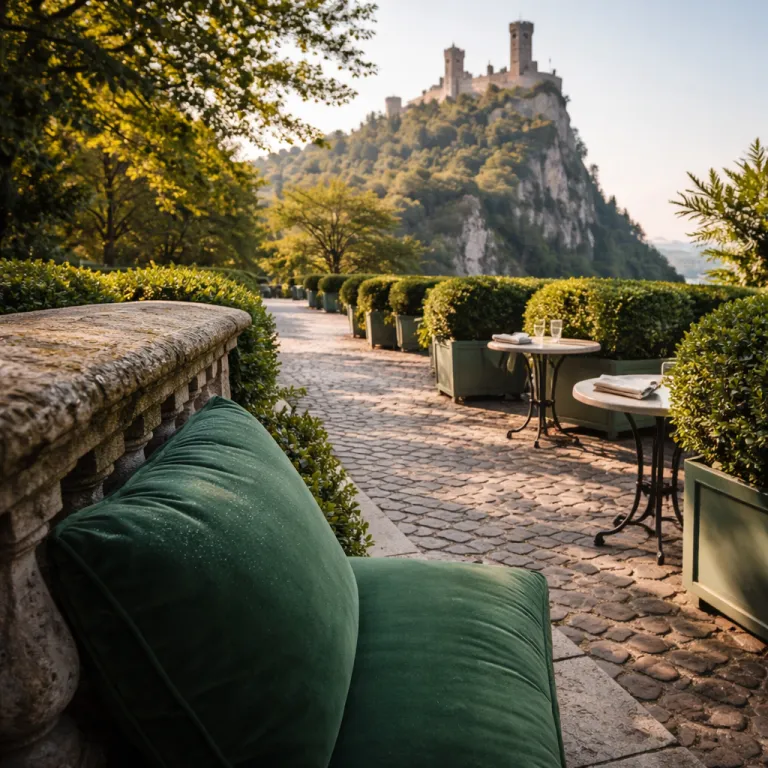
San Marino is not a hidden country, it is an underslept republic
San Marino appears in every recent “hidden Europe” trend piece, often grouped with Moldova and Liechtenstein as if one tiny country in Europe were interchangeable with another. The framing sounds flattering for a microstate, yet it ignores that this independent republic surrounded by Italy welcomed about 2.1 million visitors in 2023 according to official tourism statistics from the Republic of San Marino (Istituto Nazionale di Statistica), a volume that does not match any serious definition of hidden. What remains genuinely overlooked is how few of those visitors actually book a room in the city on Mount Titano and experience the Old Town after the last bus back to Rimini has gone.
On paper, the numbers look strong for Europe travel planners who see San Marino as a rising destination, with accommodation capacity up roughly 5.6 percent in recent years and around 2,193 beds now available across hotels and new guesthouses, again based on the latest data released by the national statistics office. In practice, most travellers still treat the country as a 90 minute detour from the Adriatic coast, rushing from coach park to cable car to the three towers without ever seeing Piazza della Libertà once the day trippers leave. The result is a paradox where the UNESCO World Heritage status draws crowds by day while the quieter side of the republic—its restored palazzi, empty terraces and attentive service—remains the preserve of those who actually stay overnight.
The world’s oldest republic has never been about mass tourism, and its leaders have historically used tourism, philately and numismatics to balance economic resilience with cultural preservation. Official information from the State Secretariat for Tourism notes that “San Marino is the world's oldest republic, founded in 301 AD,” and that “Visit the Three Towers on Mount Titano” and “Explore the medieval old town” are still the core experiences, yet these are transformed once the city streets fall silent. For travellers who care about atmosphere as much as views, the real sense of discovering a lesser-known corner of Europe begins around 19:00, when the last excursion groups vanish and the stone lanes between the towers and the palaces belong almost entirely to hotel guests.
After 19:00, Mount Titano becomes a private hilltop for those who booked
Once the coaches to Rimini and the regional bus services roll back down towards Italy, the Old Town on Mount Titano changes character completely. The same streets that felt like an open air museum at midday become a calm, walkable city of just 33,500 people, spread across about 61 square kilometres, where you can cross Piazza della Libertà in two minutes and still pause to read the inscriptions on the Palazzo Pubblico. For guests in luxury and premium hotels, this is when the idea of a hidden European microstate stops being a marketing phrase and starts feeling like a private hilltop republic.
From the ramparts near the three towers, the night view stretches across the Adriatic coast and the Italian plain, yet the terraces remain surprisingly quiet for a UNESCO World Heritage site. A handful of high end properties, many in restored palazzi, now offer rooms where you can look directly towards the top ridges of Mount Titano and wake before the first day trip bus arrives. Examples include long-established addresses such as Hotel Titano and Grand Hotel San Marino, alongside newer boutique options that focus on design and discreet service. Our detailed guide to San Marino hotels for refined stays shows how these addresses turn the national story into a lived experience rather than a quick passport stamp; some of the links in that guide are affiliate links, which means we may earn a commission at no extra cost to you if you choose to book through them.
Staying two nights rather than one allows time to visit San Marino City at different hours, walk between the three towers at dawn and late evening, and sit in Piazza della Libertà when only local voices echo off the stone. It also lets you read San Marino’s layered history in situ, from Saint Marinus founding the community on Mount Titano as a refuge from persecution to the Captains Regent still presiding over ceremonies in the square. For independent travellers planning Europe travel with an eye for nuance, this is the moment when the republic becomes not just another country in Europe but a fully formed stay, and the promise of a quieter, more intimate San Marino finally makes sense.
How to book the crowd free San Marino that trend pieces promise
The Travel & Tour World article on hidden European destinations is directionally right about one thing, even if the headline oversimplifies a complex country. San Marino does offer relatively affordable luxury and crowd free experiences compared with many Italy hotspots, but only if you commit to sleeping on Mount Titano instead of treating the republic as a quick stop between Rimini and other Adriatic coast resorts. The structural bottleneck is not interest but bed nights, which means the travellers who plan ahead and book premium rooms—ideally at least four to six weeks in advance for peak months such as May, June, September and early October—are effectively rewarded with a quieter heritage site than the visitor numbers suggest.
For a serious stay that matches the crowd free image, start by choosing accommodation inside the historic centre or just below the walls, rather than in the lower town along the bus routes. Aim for arrival by early afternoon, when the Rimini–San Marino bus and the Borgo Maggiore cable car still run frequently, and plan to stay until after the last regular services around 19:00–20:00 so you experience the Old Town without excursion groups. Our overview of luxury and premium hotel booking websites in San Marino explains how to filter for properties with direct views of the three towers, access to private terraces and clear privacy policy statements that match international expectations; it also contains affiliate links, and bookings made through those links may generate a commission that helps support our editorial work.
Readers who want a deeper hotel shortlist can turn to our dedicated feature on luxury resorts in San Marino, which focuses on properties that translate the promise of a quieter San Marino into concrete details such as late check out, tailored transfers from Rimini and curated access to the main heritage site landmarks. Staying within the city walls also makes it easier to visit San Marino’s museums early, walk the top mount paths before the heat builds and appreciate how this oldest republic has maintained independence while being entirely surrounded by Italy. For travellers who treat San Marino as just another stop on a Europe travel itinerary, the country will always feel busy by day, but those who stay two nights or more—especially outside the peak August holiday period—will find a calmer republic that lives up to the best versions of its under-the-radar reputation.