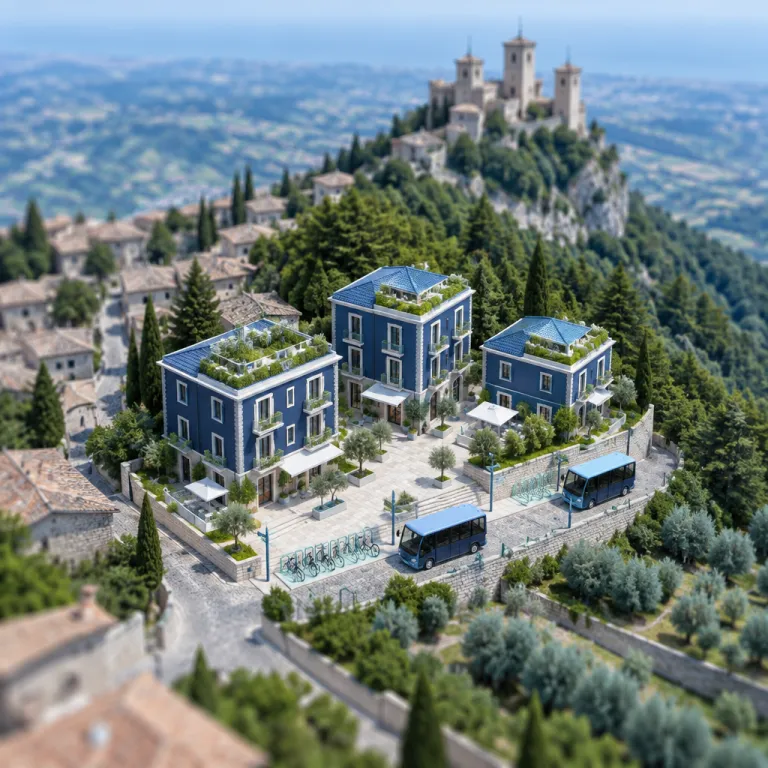
When every guest matters in a 61 square kilometer republic
San Marino is a hilltop republic where the entire country fits into 61 square kilometers. The scale of this microstate means that every decision about tourism, every new luxury room, and every extra airport transfer from Italy has a visible impact on daily life. When you plan a stay here, you are not just choosing a hotel in a city ; you are entering a compact state where the balance between hospitality, heritage, and resident comfort is constantly negotiated.
The numbers frame the conversation about san marino responsible tourism micro state realities with unusual clarity. With around 33 000 residents and more than two million annual visitors, the ratio of guests to locals is far higher than in many parts of the Emilia Romagna region, and the tourism economy is tracked almost line by line through San Marino Card transactions. For a luxury traveler, this transparency turns each visit to San Marino into a conscious act, because your room choice, your dinner reservation in the historic centre, and even your ticket to the state museum feed directly into a national ledger.
Unlike a large country where tourism data disappears into regional averages, this republic operates almost at village scale. The historic centre San Marino shares with Mount Titano is a UNESCO World Heritage site, and the three towers on the ridge are not abstract monuments but part of a lived city San residents still use and navigate. When you walk from Palazzo Pubblico to Basilica San Marino in the marino historic core, you are moving through the same streets that the Captains Regent and the Great General Council cross on their way to work.
Luxury hotels as levers in a microstate economy
In this context, a new premium hotel is not just another property in a crowded market. A single high end opening on Mount Titano can shift employment patterns, alter traffic flows in the historical centre, and subtly redirect where visitors spend on wine, dining, and wellness. For travelers using a curated platform such as mysanmarinostay.com, the choice between several refined hotels in the heart of the city becomes part of the san marino responsible tourism micro state equation.
Most luxury hotels in the city San Marino cluster along the ridge between the three towers, which concentrates both views and visitor pressure. Rooms that look toward the Adriatic coast and the Emilia Romagna plain offer extraordinary views, but they also sit above narrow medieval streets where delivery vans, residents, and day trippers compete for space. When you book, consider properties that stagger check in times, partner with local guides, and promote evening experiences, because these details help redistribute tourism across hours rather than adding to midday congestion.
The republic San Marino has long relied on tourism as a pillar of its economy, yet the state is increasingly attentive to how luxury demand can support rather than strain the marino historic fabric. Hotels that source regional wine from small producers in the surrounding region, that recommend lesser known walks on the slopes of Titano, and that encourage guests to visit the State Museum outside peak hours are quietly aligning with national policy. In a microstate where the General Council debates tourism strategy in full public view, your hotel’s sustainability page is not marketing gloss but a visible contribution to the country’s long term balance.
Rethinking overtourism on a hilltop instead of a lagoon
Overtourism in Venice has become a global shorthand for cruise crowds and entry fees, but the san marino responsible tourism micro state conversation sounds different. Here, the goal is not to reduce visitor numbers dramatically but to smooth them across seasons, days, and even hours, because the republic’s economy depends heavily on arrivals. The challenge is to avoid turning the historic centre into a theme park during medieval days festivals while keeping hotels and restaurants viable in quieter months.
Most visitors still treat San Marino as a day trip from Italy, arriving late morning and leaving before dinner, which compresses pressure on the three towers, Palazzo Pubblico, and the main streets of the historical centre. Luxury travelers who stay overnight immediately help rebalance this pattern, because their spending shifts into the evening and early morning when the city San Marino breathes again. Walking the ramparts at dusk, when the last coaches have left and the Captains Regent’s palace glows softly, feels like a private audience with the republic’s history.
September has become a strategic month for this redistribution, with events such as the Sport in Fiera multidisciplinary festival organized by the National Olympic Committee drawing a more diverse crowd. If you plan to visit San Marino during this period, consider aligning your stay with quieter weekdays and exploring the historic centre before the day trip wave arrives. A detailed seasonal guide such as the one on staying in the old town when it exhales can help you time your arrival so that your presence supports, rather than overwhelms, the microstate’s rhythms.
From fortress queues to layered experiences
For a small country, San Marino offers a surprisingly layered set of experiences once you look beyond the standard fortress ticket. The three towers on Mount Titano remain essential, but a responsible itinerary might pair them with a tasting of regional wine in a family run enoteca, a visit to the State Museum at a calm hour, and a walk down to less visited districts below the ridge. This approach spreads your footprint across the city and gives the marino historic core room to breathe.
Luxury hotels can guide this shift by curating experiences that value depth over volume, steering guests toward artisans in the historic centre and to restaurants that prioritize local produce from Emilia Romagna and the surrounding hills. When a concierge suggests a late evening visit to Palazzo Pubblico’s square rather than a midday rush, they are quietly practicing san marino responsible tourism micro state principles. Over time, these micro decisions help the republic San Marino maintain its character as a living state rather than a backdrop.
For solo travelers, this slower rhythm is particularly appealing, because it turns the city San Marino into a place where you can linger without constantly navigating crowds. Early morning walks from Basilica San Marino to the first of the three towers reveal a different history, one of stone, silence, and the distant Adriatic. In a microstate where the Great General Council still meets within sight of your hotel balcony, choosing when and how you move becomes part of the shared civic choreography.
Carbon, comfort, and the hilltop logistics of luxury
Reaching San Marino usually means arriving through Italy, often via Rimini or Bologna, then climbing toward Mount Titano by car or bus. For a microstate that depends on tourism, the carbon cost of every transfer is significant, especially when multiplied by the high visitor to resident ratio. This is where san marino responsible tourism micro state thinking intersects directly with your booking choices.
Some high end properties now coordinate shared transfers from regional hubs, reducing both emissions and congestion on the narrow roads that lead into the historic centre. When you evaluate hotels, look for those that publish clear information about their energy use, waste management, and partnerships with local suppliers, because transparency is easier to verify in a country this compact. A detailed report on carbon neutral ambitions for hilltop luxury stays shows how even incremental changes in heating systems, laundry practices, and sourcing can shift the republic’s overall footprint.
Inside the walls, logistics become even more delicate, as deliveries, luggage transfers, and housekeeping all move through the same medieval streets that residents use daily. Hotels that limit vehicle access during peak hours, that coordinate with the State Museum and Palazzo Pubblico on event timings, and that encourage guests to walk rather than request short transfers are quietly reshaping the city San Marino’s daily flow. In a state where the General Council can see the impact of tourism from their chamber windows, these operational details are part of a national sustainability narrative.
Designing rooms for a compact republic
Space is finite on Mount Titano, and that reality shapes how luxury rooms are designed and priced. Rather than sprawling suites, many properties in the historic centre offer refined, well proportioned rooms that prioritize views over square meters, framing the three towers, the basilica, or the Emilia Romagna plain. Choosing a room with a terrace or balcony can reduce your desire for constant excursions, which in turn lightens your footprint on the marino historic streets below.
Responsible luxury here often means thoughtful restraint rather than excess, from water saving fixtures to discreet climate control that respects the fabric of centuries old buildings. When a hotel invests in careful restoration of a palazzo instead of new construction outside the walls, it preserves both the skyline and the republic’s layered history. This is san marino responsible tourism micro state practice translated into stone, wood, and glass.
For solo travelers, these design choices create a sense of intimacy that suits the scale of the country. A small lounge with a view toward Palazzo Pubblico can feel more appropriate than a vast lobby, especially when you know the Captains Regent are working just a short walk away. In a republic where the economy, the state institutions, and the tourism sector share the same hill, luxury becomes less about isolation and more about considered integration.
Heritage, governance, and where your money actually goes
San Marino is not just a picturesque city on a rock ; it is one of the world’s oldest republics, with institutions that predate many modern states. The story of Saint Marinus, the stonemason who founded the community on Mount Titano, still shapes how residents talk about independence and responsibility. When you stay in the historic centre, you are sleeping within sight of the chambers where the Great General Council meets and where the Captains Regent are sworn in.
This proximity between governance and tourism means that your spending has a traceable path through the economy of the state. Entrance fees to the three towers, the State Museum, and Palazzo Pubblico support conservation, while hotel taxes and San Marino Card transactions feed into public services that residents and visitors share. In a microstate outside the European Union but surrounded by Italy, these flows are monitored closely, and debates about tourism policy are part of everyday political life.
For travelers, this creates an unusual level of accountability, because the same officials who oversee tourism strategy might pass you in the streets of the historical centre. Choosing locally owned hotels and restaurants, booking guided walks with licensed San Marino residents, and buying wine or crafts from regional producers all reinforce the republic’s autonomy. This is san marino responsible tourism micro state behavior at its most tangible, turning a weekend stay into a contribution to a centuries long experiment in self government.
Reading the city as a living institution
Walking from Basilica San Marino to the square in front of Palazzo Pubblico, you can read the city as a living constitution. The flags, the coats of arms, and the rhythm of official ceremonies are not staged performances for visitors but the daily expression of a functioning state. During certain periods, you may see guards in ceremonial dress or processions that mark the rotation of the Captains Regent, reminding you that this is a working republic.
Luxury hotels that frame these institutions respectfully, rather than treating them as mere backdrops, help guests understand where they are. A room that looks onto the palazzo’s façade or toward the three towers invites you to engage with the country’s history rather than simply consume its views. When concierges explain the role of the Great General Council or suggest attending a public event in the square, they are extending hospitality into civic education.
For solo explorers, this blend of comfort and context is part of the appeal of staying overnight rather than rushing back to Italy. The city San Marino after dark feels both intimate and quietly official, with lit stone walls and the distant sense of a state at work. In such a compact environment, responsible tourism means recognizing that your presence is always within sight of the institutions that keep the republic running.
Designing a responsible luxury itinerary in San Marino
Planning a stay that aligns with san marino responsible tourism micro state principles starts with timing. Aim for shoulder seasons or midweek visits, when the flow of day trippers from Italy eases and the historic centre can absorb guests more comfortably. This approach benefits both you and the republic, offering calmer streets, more attentive service, and a gentler impact on the city.
Once dates are set, choose accommodation that engages actively with sustainability and local culture, not just with panoramic views. A curated overview of high end hotels in the heart of the city can help you compare how different properties handle energy use, sourcing, and guest education. Look for explicit partnerships with the State Museum, local guides, and regional producers, because these signal a deeper commitment to the economy and heritage of the country.
Your daily rhythm matters as much as your booking, especially in a microstate where every movement is felt. Start early with a quiet walk along the walls between the three towers, then visit San Marino’s main monuments before the late morning peak, leaving afternoons for slower experiences such as wine tastings, artisan visits, or time in less crowded quarters below Mount Titano. Evenings are ideal for lingering in small restaurants that showcase produce from Emilia Romagna and nearby hills, turning dinner into a direct investment in the republic’s food culture.
Practical choices with outsized impact
Small decisions accumulate quickly in a place this compact, so treat each one as part of your contribution to the state. Choose refillable water bottles instead of single use plastics, use public or shared transport where possible, and respect access rules around the marino historic walls and towers. When you book guided experiences, prioritize licensed local experts who can explain the layers of history that shaped the republic San Marino.
Consider extending your stay by a night, because one extra evening can shift your experience from sightseeing to genuine connection. With more time, you can attend events in the square by Palazzo Pubblico, explore the State Museum at a relaxed pace, or simply sit with a glass of regional wine while the city San Marino settles into its nocturnal calm. This slower approach aligns perfectly with san marino responsible tourism micro state values, which favor depth, respect, and reciprocity over quick consumption.
Ultimately, the most responsible luxury in this hilltop republic is attention. Attention to how your hotel operates, to when you visit key sites, and to how your spending circulates through the economy of a country that still lives largely on one mountain. In 61 square kilometers, there is nowhere for indifference to hide.
FAQ
Is San Marino a good destination for a luxury stay, or just a day trip?
San Marino works very well as a luxury stay, especially for travelers who value heritage, views, and a compact, walkable historic centre. While many visitors come for a day from Italy, staying overnight lets you experience the city San Marino before and after the crowds, when the three towers, Palazzo Pubblico, and the marino historic streets feel almost private. This longer stay also aligns better with san marino responsible tourism micro state principles, because it spreads your impact over more hours and supports local hotels and restaurants.
How can I make my hotel stay in San Marino more sustainable?
Choose hotels that publish clear sustainability policies, use energy efficient systems, and work with local suppliers for food and wine. Travel at off peak times, walk within the historic centre instead of using vehicles, and visit major sites such as the State Museum and the three towers outside the busiest midday window. Supporting locally owned businesses and booking licensed guides also strengthens the republic’s economy while respecting its limited space.
Is it easy to reach San Marino without a car?
Most visitors arrive via Italy, using trains or flights to Rimini or Bologna, then connecting by bus or arranged transfer to Mount Titano. Several hotels can coordinate shared transfers, which reduce both emissions and congestion on the roads leading into the historic centre. Once in the city San Marino, the compact layout makes walking the most practical and responsible way to move between sites.
What are the must see sites for a first visit that still respect the microstate’s scale?
For a first visit, focus on the three towers along the ridge of Mount Titano, Palazzo Pubblico and its square, Basilica San Marino, and the State Museum in the historic centre. Plan these visits early in the morning or later in the afternoon to avoid peak crowds and lessen pressure on the marino historic streets. Complement them with quieter experiences such as regional wine tastings, walks on less frequented paths, and time in small museums or churches.
Does San Marino belong to the European Union, and does that affect travel planning?
San Marino is not a member of the European Union, but it is closely integrated with Italy for practical matters such as border crossings and currency. For most travelers, especially those already in the Schengen Area, entering the republic feels seamless, with no formal border checks on the main access roads. This arrangement allows the microstate to maintain its political independence while remaining accessible for tourism and business.
Sources: Visit San Marino official tourism statistics ; UNESCO World Heritage Centre ; San Marino Ministry of Tourism publications.