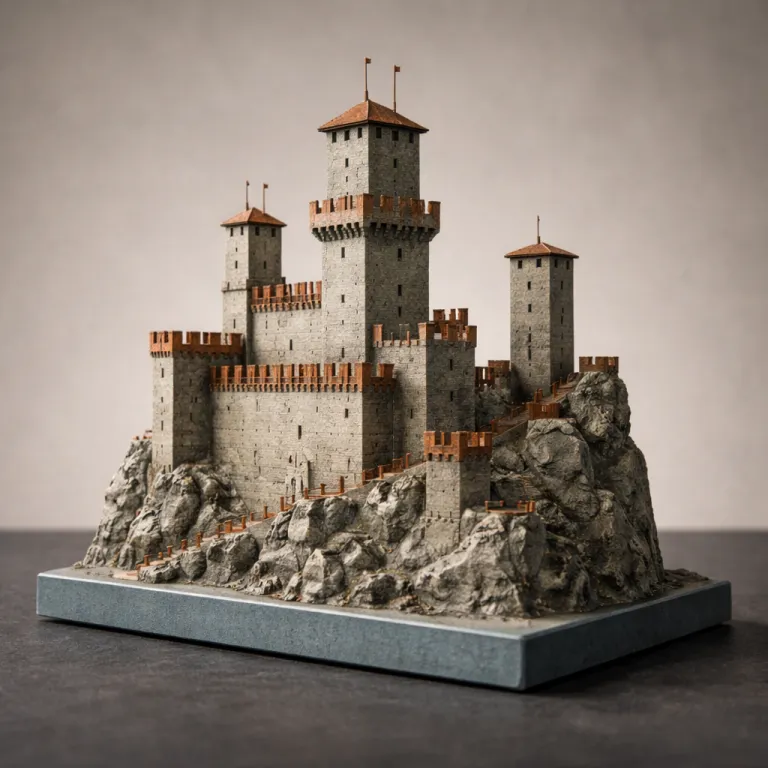
Why luxury travelers should read the san marino three towers history
The history of the Three Towers of San Marino is not a single tale but three distinct defensive answers layered along Monte Titano, whose highest summit reaches about 739 metres above sea level. Each fortress, and all three together, shaped how the Republic of San Marino protected its independence, and that same ridge now frames some of the best luxury hotel views in the microstate. When you book a premium stay in the city, you are effectively choosing your own vantage point on Guaita, Cesta and Montale and on the long path that once linked watchfires rather than wellness suites.
Think of the City of San Marino as a stone spine running along Mount Titano, with each tower anchoring a different vertebra. The first Guaita Tower, the second tower of Cesta and the third tower of Montale were never meant as a single postcard; they were a medieval risk management strategy, distributing defense across three peaks instead of one. Reading this story before you travel helps you explore not only the monuments but also the hotels and restaurants that now occupy former defensive lines, especially around the Città di San Marino historic centre.
Luxury travelers often arrive from San Marino day trips out of Rimini and underestimate how much the story of the towers rewards an overnight stay. Once the excursion buses leave the city, the Witches’ Path between Guaita and Cesta becomes a quiet stone ribbon where you can walk almost alone and feel the centuries underfoot. From a high floor in a premium property facing Monte Titano, the same towers and the same path turn into a private theatre of changing light, with the three silhouettes holding the horizon.
Guaita tower and the first defensive problem on Monte Titano
Guaita Tower is the oldest of the three fortifications and the one most luxury guests see first from their hotel balconies. The earliest core is generally dated to the 11th century, with major rebuilding in the 15th century when San Marino needed a compact fortress more than a scenic viewpoint, and this first tower guarded the most vulnerable approach to Monte Titano and for a time served as a prison. Its stone mass still dominates the San Marino skyline, and from many premium rooms the Guaita bastions look close enough to touch, especially at night when the ramparts are lit.
Walking from the city up to Guaita, you follow a path that once carried soldiers and prisoners rather than camera phones. The climb is short but steep, so wear comfortable shoes for the ascent and allow time to explore the inner courtyards, the restored walls and the narrow walkways that frame some of the best views over the surrounding countryside. From here you understand why the republic chose three towers instead of one; Guaita alone could not watch every flank of Mount Titano or the plains beyond San Marino.
Inside the fortress, the story of the three towers becomes tactile as you trace the stone masonry and look down toward the luxury hotels that now cluster along the ridge. The fortress is usually open daily from morning until late afternoon, with combined tickets that often include Cesta and other sites, so check current hours and prices before you go. Within a ten minute walk of Guaita, several hotel restaurants recommended by local concierges offer refined Romagna-inspired menus with terraces where the views stretch further than the printed options, and you can find their names in curated lists such as the guide to where San Marino hotel concierges actually send you for dinner.
Cesta tower, the second tower and a museum of ancient weapons
Cesta Tower, the second tower on the highest peak of Monte Titano at roughly 755 metres above sea level, answers a different defensive question from Guaita. Where the first tower secures the immediate city walls, Cesta looks outward, its position on Monte Titano giving long-range views that once meant early warning and now mean sweeping panoramas for slow travel. Today this second tower houses the Museum of Ancient Weapons, opened in the mid-20th century around 1956, and the collection turns the San Marino three towers story into a gallery of steel, wood and engineering.
Inside the museum, ancient weapons are displayed in vaulted rooms that still feel like a working fortress rather than a neutral gallery. Here the three towers’ history intersects with technology, as you move from early crossbows to more sophisticated firearms and understand how each century forced the republic to rethink its defenses and its network of watchpoints. The State Museums Pass, sold at official ticket offices and museum entrances, matters for luxury travelers because it quietly unlocks Cesta, the State Museum, the National Gallery, the Art Gallery of San Francesco, the Stamps and Coins Museum and the Public Palace in one elegant gesture, allowing you to curate your own cultural path between spa appointments.
From the ramparts of Cesta, the views back to Guaita and forward toward Montale show exactly why three towers were necessary on Mount Titano. You see the Witches’ Path threading the ridge, the City of San Marino dropping away on one side and the forests of Titano on the other, and you can almost map where signal fires once leapt from tower to tower. For a deeper read on how these perspectives shape modern hospitality, consult the analysis of the properties that define luxury hospitality in the Republic of San Marino, which explains why certain suites sell out whenever the light over Cesta and Montale turns golden.
Montale, the third tower and the quiet end of the witches path
Montale, the third tower, is the smallest of the three but arguably the most atmospheric for travelers who value silence over spectacle. Built in the 14th century when the republic needed a watchtower more than a full fortress, the Montale outpost guarded a different approach and formed part of an alarm system that could warn Guaita and Cesta of any invasion. Today visitors cannot enter Montale, yet its closed door and isolated position at the end of the Witches’ Path make it a powerful full stop to the San Marino three towers narrative.
The walk from Cesta to the third tower follows the Witches’ Path, a narrow route along Monte Titano that feels far from the city even though you are still within the Città di San Marino boundaries. Luxury guests who stay overnight can time this walk for late afternoon, when the crowds thin and the views over the valleys soften into layers of blue and gold. From certain premium hotels on Monte Titano you can see all three towers aligned, with Montale slightly withdrawn, and that distant profile of the third tower becomes a reminder that not every part of the republic is accessible, even in an age of frictionless travel.
Montale also completes the visual identity of San Marino, since all three towers appear together at the centre of the national flag and in countless hotel logos. The three silhouettes tell a story of continuity that many luxury properties echo in their design, blending contemporary interiors with stone walls that share the same rock as Monte Titano itself. When you choose a room that frames Guaita, Cesta and Montale in a single window, you are effectively booking a private reading of the towers’ narrative from dawn to nightfall.
Strategic logic, hotel choices and how to explore the towers
The strategic logic behind the San Marino three towers history is simple: three peaks on Monte Titano meant three different lines of sight, and therefore three complementary defenses. Guaita covers the immediate approaches to the city, Cesta on the highest point of Mount Titano scans the wider horizon, and Montale stands as a discreet third tower watching a less obvious route. For modern travelers, that same geometry now shapes where the best luxury hotels sit, which terraces offer the most dramatic views and how you plan your path between culture and comfort.
When you explore the sequence of towers, treat them as a narrative rather than a checklist and start in the City of San Marino itself. Climb first to Guaita to understand the raw fortress, then follow the Witches’ Path to the second tower of Cesta for the Museum of Ancient Weapons and the long views, and finally continue to Montale for the quiet end of the ridge. This order mirrors the historical timeline from the earliest medieval core of Guaita through the later construction of Cesta and Montale and helps you feel how the republic layered its defenses over time.
Planning a premium stay around this path is easier when you use a curated resource such as the guide to San Marino luxury hotels and premium stays, which maps properties against the ridge of Titano. Choose a hotel in the historic centre if you want to step from lobby to fortress in minutes, or opt for a property slightly below Monte Titano if you prefer to look up at the three towers from a distance. Either way, the three silhouettes will anchor your sense of place every time you return from a day of travel to a glass of local wine on your balcony.
Reading in tower details, from masonry to museum labels and hotel restaurants
To move beyond the postcard, you need a reading list of details inside each tower and around the nearby hotels. In Guaita, look closely at the stone masonry joints and the narrow arrow slits, then step onto the walls where the views frame both the city and the modern luxury properties that now line the ridge of Monte Titano. In Cesta, slow down in the Museum of Ancient Weapons and read the labels that explain how each century forced San Marino to refine its defenses, because those same shifts in technology shaped the need for three towers instead of one.
Between Guaita and Cesta and between Cesta and Montale, pause along the Witches’ Path and notice how the rock underfoot changes texture, a reminder that Mount Titano itself is the real foundation of every tower and every hotel. From certain bends in the path you can see the Città di San Marino rooftops below, the Guaita battlements rising above them and the second tower of Cesta beyond, and this layered view tells you more about the republic’s priorities than any single museum panel. Down in the city, hotel concierges often suggest specific dining rooms where the windows align perfectly with the skyline of the towers, and these restaurant choices can be as important to your experience as the fortress tickets.
For lunch within a ten minute walk of Guaita, prioritize hotel restaurants that balance refined service with unhurried pacing, so you can sit with the three silhouettes while you eat. Ask for a table that faces Monte Titano rather than the street, and time your meal so that you return to the towers when the light has shifted and the crowds have thinned. As local guides often remind guests, “Guaita and Cesta are open; Montale is not” and “What is housed in Cesta Tower? Museum of Ancient Weapons.” and “Are the towers depicted on San Marino's flag? Yes, all three towers are featured.”
FAQ
Can visitors enter all three towers in San Marino ?
Visitors can enter Guaita and Cesta, which together anchor much of the San Marino three towers history. The Montale tower, or third tower, remains closed to the public, but walking to its base along the Witches’ Path still offers strong views and a sense of the former watchtower role. Luxury travelers often combine interior visits to the first and second towers with exterior viewpoints of Montale from hotel terraces on Monte Titano.
What is the best way to explore the three towers from a luxury hotel ?
The most comfortable approach is to book a hotel in the historic City of San Marino so you can walk directly to Guaita. From there follow the path to the second tower of Cesta for the Museum of Ancient Weapons, then continue to the third tower of Montale before looping back through the old streets for a late lunch. This sequence respects the original defensive logic of the network of towers and fits easily into a relaxed day of travel with time for spa or pool on your return.
Why does the State Museums Pass matter for premium travelers ?
The State Museums Pass bundles access to Cesta’s Museum of Ancient Weapons with key institutions such as the State Museum and the National Gallery, turning the San Marino three towers history into part of a wider cultural circuit. For luxury guests staying on Monte Titano, this means you can move smoothly between fortress walls, curated galleries and hotel lounges without queuing for separate tickets. The pass usually offers good value if you plan to explore more than one museum and want to keep your day flexible; consult the latest official information for current prices and validity.
Which hotel areas offer the best views of the three towers ?
Properties located along the upper ridge of Monte Titano or just below the historic centre usually provide the most dramatic views of Guaita, Cesta and Montale. Rooms and restaurants facing the valley side often frame all three towers, especially at sunrise and sunset when the three silhouettes stand out against the sky. When booking, request a high floor with a tower-facing balcony and mention that you are interested in the San Marino three towers history, so staff can match you with the most suitable room type.
Is an overnight stay necessary to appreciate the towers’ history ?
An overnight stay in San Marino transforms the three towers from a quick checklist into a layered experience. Once the day trippers leave the city, the Witches’ Path quiets, the museum galleries in Cesta feel more contemplative and the Guaita walls glow in the evening light. From a well chosen luxury hotel on Monte Titano, you can watch the skyline of the towers shift across the hours, which tells you more about the republic’s rhythm than any brief daytime visit.